
Hair loss can be an overwhelming experience, especially for women facing female pattern hair loss, or androgenetic alopecia, which is the most common form of hair thinning among women.
If you’re experiencing thinning hair and wondering about potential treatments, you may have come across spironolactone as a possible solution.
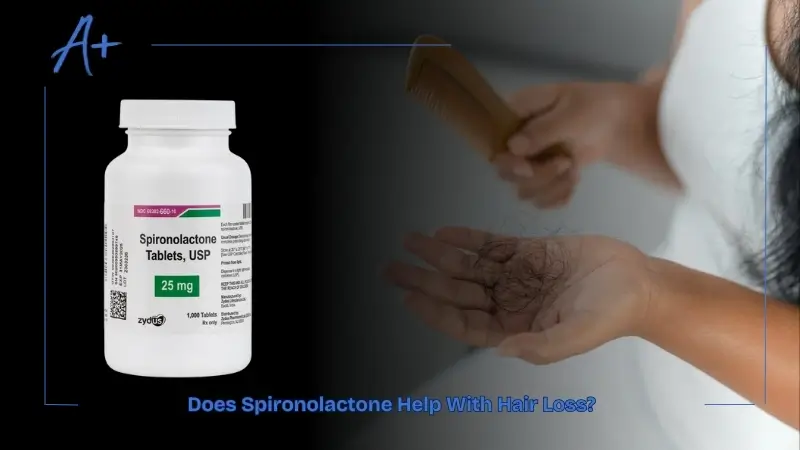
Spironolactone, a medication primarily used to manage high blood pressure, has gained significant attention for its effectiveness in treating hair loss due to its anti-androgenic properties. But does spironolactone really help with hair loss?
Our specialists have found that spironolactone can indeed be a promising treatment for women suffering from hormonal hair loss.
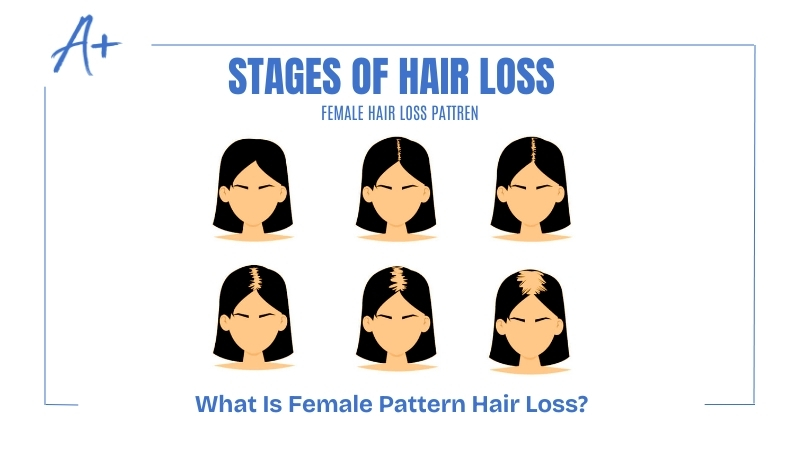
Before we dive into spironolactone’s role in treating hair loss, it’s essential to understand the root cause of female pattern hair loss. This condition is characterized by gradual thinning of the hair, often starting at the crown or part line, and is typically linked to hormonal changes.
As women age, the impact of androgens, male hormones like testosterone and dihydrotestosterone (DHT), becomes more pronounced. These hormones can make hair follicles shrink, resulting in thinner hair strands that may eventually fall out.
Female pattern hair loss can become especially noticeable in women over the age of 50, but it can begin much earlier, sometimes as early as the 20s or 30s. Research suggests that by the age of 50, nearly 40% of women experience some form of androgenetic alopecia.
How Does Spironolactone Work for Hair Loss?
Spironolactone is a diuretic medication typically used to manage conditions like high blood pressure and edema. However, it has a unique additional benefit: anti-androgenic properties. This means it can block the effects of androgens, specifically testosterone and dihydrotestosterone (DHT), on the hair follicles.
How Spironolactone Blocks Hair Loss
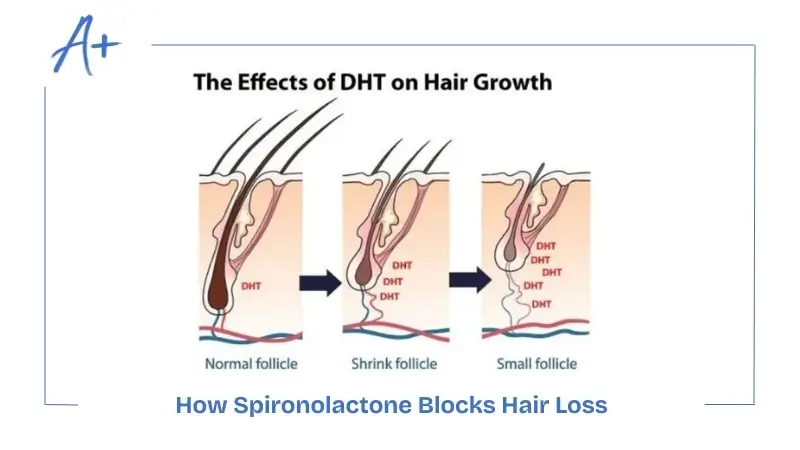
Our specialists often describe the process of hair follicle damage due to DHT as a “lock-and-key” mechanism. For hair follicles to shrink and miniaturize (leading to thinner hair), DHT binds to androgen receptors on the follicle.
Spironolactone blocks these receptors, preventing DHT from binding to the follicle, and as a result, hair thinning can be reduced, and even some thickening of hair can occur.
Spironolactone also reduces the production of testosterone, further decreasing the amount of androgens available to impact the hair follicles.
Why Is Spironolactone Particularly Effective for Women?
Unlike men, who experience hair loss primarily due to the direct effects of testosterone and DHT, women also experience fluctuating hormone levels throughout their lives. These fluctuations, whether due to pregnancy, menopause, or birth control, can make women more susceptible to hair thinning.
For women experiencing androgenetic alopecia, spironolactone is beneficial because it addresses the underlying hormonal factors driving hair loss.
Does Spironolactone Actually Work?
Yes, spironolactone can be highly effective for female pattern hair loss. Studies and clinical experience have shown that about 75% of women taking spironolactone experience improvement, either by halting hair loss or seeing thickening of their hair. The best results are often observed after 6 months to 1 year of consistent treatment.
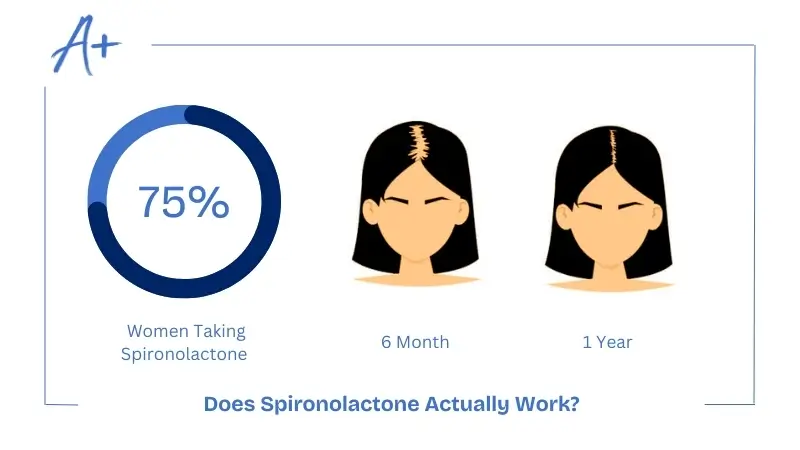
In fact, many women report that spironolactone helps them regain hair density and prevent further thinning. Our specialists typically suggest combining spironolactone with other treatments, such as minoxidil or low-level laser therapy, for enhanced results.
When using spironolactone for hair loss, the typical dosage is higher than the dose used for other conditions like high blood pressure. Our doctors usually prescribe a dose between 100 to 200 mg per day, divided into smaller doses (for example, 50 mg in the morning and 50 mg in the evening).
It’s important to note that for acne or other conditions, lower doses of spironolactone are often used. However, for addressing hair loss, higher doses are necessary to achieve the desired effects. Starting at a lower dose and gradually increasing can help minimize potential side effects.
Benefits of Spironolactone for Hair Loss
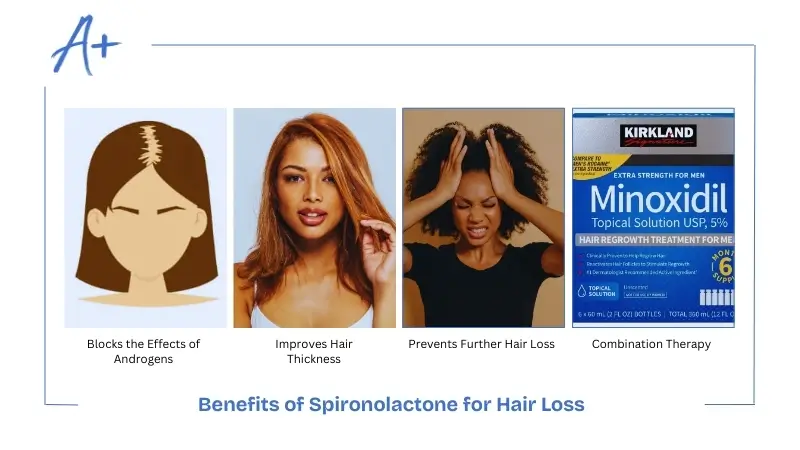
- Blocks the Effects of Androgens: By preventing DHT from binding to hair follicles, spironolactone reduces the damage caused by male hormones, which is the primary driver of female pattern hair loss.
- Improves Hair Thickness: Many women see improvements in the thickness and density of their hair after taking spironolactone for several months.
- Prevents Further Hair Loss: By targeting the hormonal cause of hair loss, spironolactone can help prevent the progression of hair thinning.
- Combination Therapy: Spironolactone works well when combined with other treatments like minoxidil (Rogaine) and laser therapy, providing comprehensive care for women with androgenetic alopecia.
Side Effects of Spironolactone
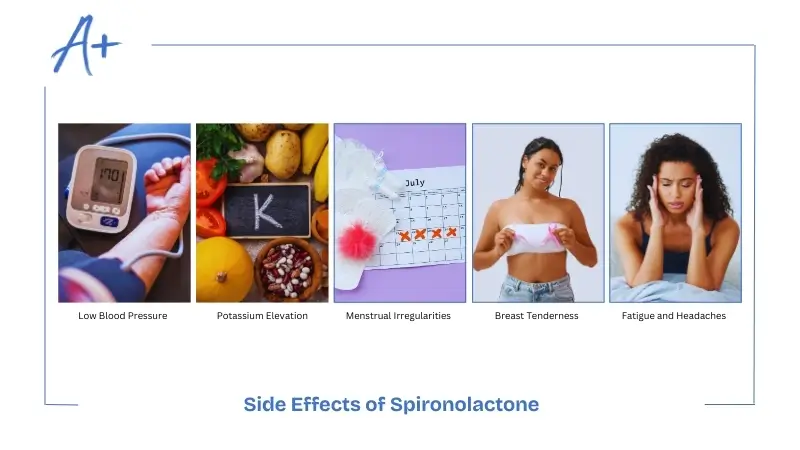
While spironolactone is generally well-tolerated, like any medication, it comes with potential side effects. Some of the most common include:
- Low Blood Pressure: Spironolactone is a diuretic, and it may lower your blood pressure, especially when standing up quickly.
- Potassium Elevation: Spironolactone can increase potassium levels in your blood, which could lead to hyperkalemia. This is more likely if you have kidney issues or take other medications affecting potassium levels.
- Menstrual Irregularities: Women may experience spotting or irregular periods, especially at higher doses.
- Breast Tenderness: Some women experience discomfort or tenderness in their breasts.
- Fatigue and Headaches: These are usually temporary and tend to improve over time.
It’s important to note that spiro is considered safe for long-term use in low doses for treating hair loss. However, monitoring for side effects is important. If you experience any unusual symptoms, consult your healthcare provider.
Our doctors recommend that women using spironolactone also take birth control pills. While birth control is not necessary for hair loss treatment, it can help regulate menstrual cycles and prevent pregnancy, especially because spironolactone is not safe during pregnancy.
Spironolactone is contraindicated during pregnancy, especially because it can negatively affect a male fetus. It is also not recommended for breastfeeding mothers.
Long-Term Use of Spironolactone
To maintain the benefits of spironolactone, long-term use is necessary. If you stop taking the medication, your hair loss will likely resume over time, as the androgenic hormones will again affect the hair follicles. However, the effects of discontinuing spironolactone will follow the normal progression of hair loss and won’t cause immediate shedding.
Once you achieve the desired results, some women can reduce their dose to maintain the benefits with lower medication usage.
Before starting any treatment, including spironolactone, it is important to get an accurate diagnosis of your hair loss. Spironolactone is only effective for androgenetic alopecia (female pattern hair loss) and will not address other forms of hair loss caused by conditions like thyroid issues, ringworm, or scalp infections.
Our specialists recommend undergoing thorough diagnostic testing, which may include:
- Blood tests (to check for thyroid function),
- Scalp biopsy (to rule out other causes of hair loss), and
- Hair pull test (to assess the extent of hair loss).
Correctly diagnosing the cause of hair loss is essential to ensure that spironolactone will be an effective and safe option.

 Chat on Whatsapp