
Struggling with trichotillomania? Worried that compulsive hair pulling will prevent hair regrowth?
In this article we are going to have a look at symptoms of this behavioural disorder. We have summed up the effective ways to reduce your hair pulling addiction along with hair regrowth strategies you can adopt to get your hair back.
As the name suggests, ‘tricho’ means hair, ‘tillo’ means pulling and ‘mania’ refers to excessive or compulsive behavior. Trichotillomania is a psychological disorder in which a person has excessive urges to pull his or her own hair.
This disorder is most often limited to head hair only but it can also involve other body hair. It not only affects the mental health of a person but also leads to an unappealing look that further adds to mental burden.
What Are The Symptoms Of Trichotillomania?
The signs and symptoms vary depending upon the severity of the urges and the look of your scalp. Some of the visible problems of trichotillomania are as follows:
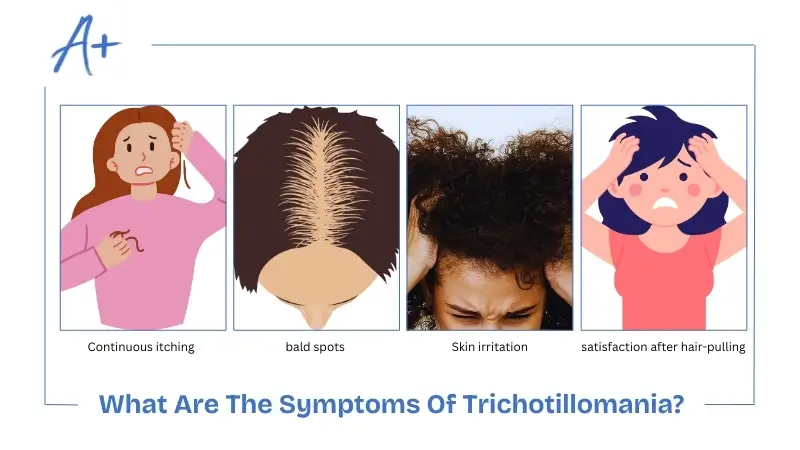
- Continuous itching and tingling of scalp
- Single or multiple bald spots
- Repetitive plucking of hair from your scalp and body
- Breaking off pieces of your own hair
- Skin irritation
- Feeling a sense of satisfaction after hair-pulling
- Eating your own pulled out hair
How To Diagnose Trichotillomania?
Diagnosing trichotillomania in early stages can be tricky. About 1-2% of the population suffers from this mental health condition but often remains undiagnosed.
A dermatologist or primary health care provider may notice signs and refer you to a psychologist for diagnosis. Trichotillomania may be diagnosed if;
- You repeatedly attempt to stop pulling hair
- Your scalp have haphazard bald patches
- Hair loss is not attributed to any other skin or hair condition
- Scanty lashes or no lashes at all
- Lack of socialization
- Hair pulling is not attributed to other health conditions
- Chewing of hair
- Preference of isolation and staying indoors
- Shortening of hair length
- In extreme cases, intestinal blockage occurs due to hair ingestion
How Can I Stop My Trichotillomania?
Stopping compulsive hair pulling requires patience and effort. Here are some ways and tips to help you stop:
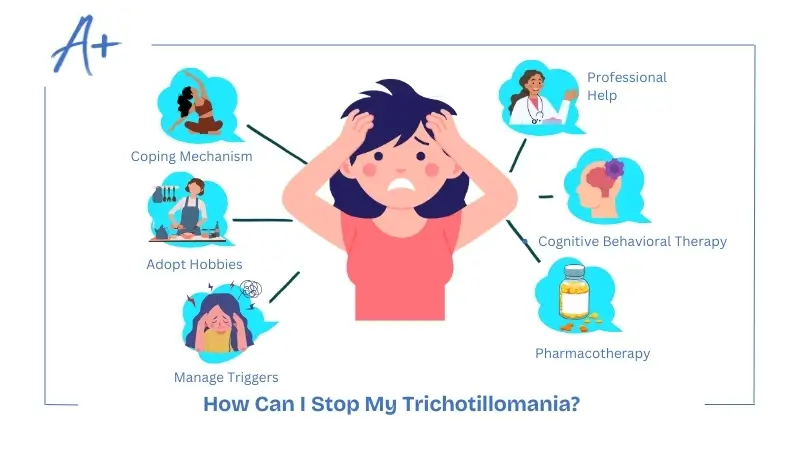
Alternative Coping Mechanism
Find alternative ways to manage your anxiety and urges. You can adopt healthy mindful activities that bring you peace and reduce stress. Consider activities such as:
- Yoga
- Meditation
- Aerobic Exercises
Adopt Hobbies
Distract yourself by getting yourself busy with hobbies, especially that involve your hand. This helps in getting your mind off the urge to pull your hair. You can adopt hobbies like;
- Cooking
- Baking
- Painting
- Sketching
- Knitting
- Jewellery making
Note:- Use a fidget toy, rubik’s cube and stress balls in order to keep your hands off your hair.
Identify And Manage Triggers
In most people, hair pulling is the result of stress and triggers. Identifying these triggers can help you avoid and manage them. For example, in students, exam stress can trigger hair plucking habits. If you manage your study schedule ahead, you can prevent this stress trigger.
Get Professional Help
If self help strategies are not working for you, then you need to consult a psychologist or a psychiatrist. Professional help can aid you in following ways:
Cognitive Behavioral Therapy
CBT helps you identify all your triggering points, help you record them, challenge the negative thoughts and make you learn the relaxation techniques.
Habit Reversal Therapy
This therapy replaces the habit of hair pulling with alternative activities like journaling, writing, knitting etc. It is a very effective treatment if done under professional help.
Pharmacotherapy
Studies have shown that taking N acetyl cysteine twice daily improves the outcomes of trichotillomania.
Your doctor may also prescribe serotonin reuptake inhibitors like fluoxetine, sertraline and clomipramine. These drugs are mainly prescribed to lower down the stress and anxiety levels which are the main causes of hair pulling.
Can Hair Grow Back After Trichotillomania?
Yes, once you overcome the habit of hair pulling, you can start your journey of hair regrowth. It is true that hair follicles might get permanently damaged with a hair plucking habit but there are still ways to overcome it. You can adopt the following ways to care for your scalp and get your hair back:
- Dermatologist Consultation:- Book your appointment with a dermatologist or cosmetologist. The doctor will examine your scalp and devise a treatment plan according to the condition of your scalp.
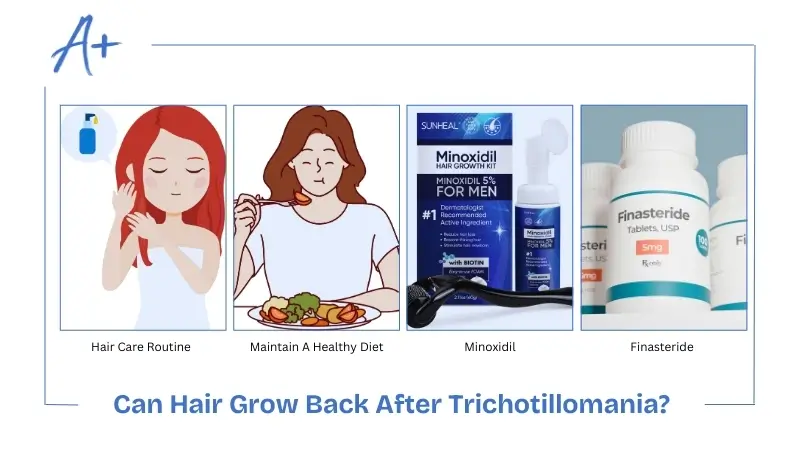
- Hair Care Routine:- Using hair growth serum and hair oils can stimulate the growth of existing follicles. Sometimes a dermaroller is recommended to induce the growth of new follicles. Use shampoo and other hair care products according to your hair type.
- Maintain A Healthy Diet:- Get a diet rich in proteins, vitamins, minerals and antioxidants. Healthy diet means a healthy body and healthy hair. Balanced diet treats your nutritional deficiencies and gives you healthy hair.
- Minoxidil:- Minoxidil is available in topical form. You can apply it directly on to your scalp. It increases the blood flow to the hair follicles and stimulates its growth.
- Finasteride: – Finasteride is available in the form of oral medication. It lowers and blocks the DHT levels in the scalp which is the main culprit of hair weakening and hair thinning.
- Microneedling: – When done regularly, it induces the increase in blood flow to the scalp and stimulates the growth of hair follicles.
- Hair Restoration Techniques:- Several hair restoration techniques are available in the market to gain back your head full of hair. Some of the most common ones are:
Frequently Asked Questions
How long does it take hair to grow back?
Hair roots take about 6 weeks and hair sprouting begins in about 8 to 12 weeks. It may take up to a year and so for the hair to grow back.
What vitamin deficiency causes trichotillomania?
It is not a nutritional deficiency disorder. However, studies have shown that iron deficiency and zinc deficiency is often linked with this mental health condition.
What supplements are good for hair regrowth trichotillomania?
Zinc supplements, biotin, iron rich foods, vitamin B12 supplements along with omega 3 fatty acids are good for hair regrowth with trichotillomania.

 Chat on Whatsapp